Posts

Help Pollinators Help Us

Image
  Pollinators are key to our production of fruits and vegetables.  If you are old enough, you probably remember seeing honey bees in your yard.  Unfortunately today, we have a growing shortage of honey bees worldwide.  There is something you can do to counteract this shortage of honey bees other than becoming a beekeeper.  Your part in the solution is really quite simple. Colony Collapse Disorder was first recognized in honey bee colonies in 2006.  It is a mysterious plague that destroys honey bee colonies.  CCD occurs when the majority of worker bees in a bee colony disappear, leaving behind a queen, plenty of food and a few nurse bees to care for the remaining immature bees.  Several possible causes of CCD have been investigated.  The possible causes of CCD may be a complex of factors including: pesticides, pathogens, climate change, migratory beekeeping, lost genetic diversity in industrial apiculture, malnutrition, electromagnetic radiati...
Shade Gardening

Image
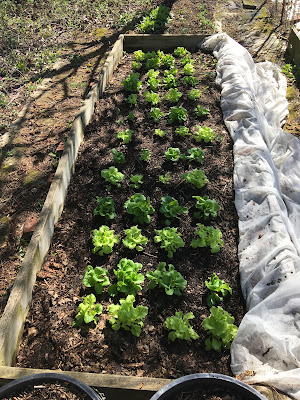
I live in Oak Park, next to the city of Royal Oak, both located in Oakland County.  I’m sure you’ve guessed, I live in a giant, beautiful forest.  We have trees here hundreds of years old, bigger than the ones you’ll find in many northern Michigan locations.  Most of the original forest here was never logged.  Don’t get me wrong.  I know there is a need for construction lumber and toilet paper.  Fortunately, we barely need any trees for newsprint and paper any longer due to computers and the internet - a great nature saving. I’m writing this today for the people who live with an abundance of shade in their yard.  You have probably asked: “What vegetables and fruits can I grow in my shady yard?”.   First, I want to warn you, if you have too much shade, very little will grow, even the plants I will describe.  Photosynthesis requires light.  It’s that plain and simple.  If you have a shady yard with some light, you will be able ...

PANDEMIC FOOD

Image
  PANDEMIC FOOD Urtica dioica     Credit: Giovanni Dall'Orto On Friday the 13th of March, 2020, my classes met in person for the last time because of the Covid pandemic.  We were told we would meet again in two weeks, but I knew that wasn’t going to happen.  It was sad to see my students for the last time and I tried to reassure them that everything would be OK. One of the classes I teach in the fall semester is “Plagues and Pandemics”.  My Plagues students and I had been talking about the Covid virus since January, watching its progress as it went from devastating cruise ships to its deadly march through the nursing home in Seattle.  We were ahead of the societal curve because we could see the life saving importance of masks, PPE and social distancing.  If Covid spread, my students knew we wouldn’t be in school for long because of the lack of social distancing and the potential for the virus to spread.   So we all went home for the long...
Image
  Simple Setup for Growing Seedlings Indoors Growing garden seedlings indoors can be a lot of fun.  It’s fairly simple.  Once you are set up, you can save money every year by growing your own transplants.  However, the biggest advantage is: you can grow a larger variety of plants from seed (e.g. heirlooms) than if you bought transplants at a store.  Buying transplants is OK.  Much of your decision on whether to start with store bought transplants, or seedlings you grow yourself, is primarily determined by how much time you have. What you need to grow seedlings indoors is: lights, light chain or rope, 2 hockey sticks (or something similar like broom handles), large zip ties, 4 large screw in hooks, a plug-in timer, a power strip with extension cord, seed trays, soil and seeds. I will divide this explanation into two parts.  First, how to set up your light system.  Second, how to plant your seed trays.   I’m going to explain my setup.  You...
Image
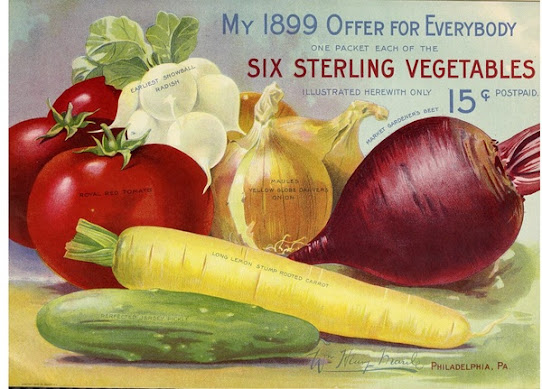
  BUYING SEEDS FOR YOUR GARDEN                                                                                         credit: Swallowtail Garden Seeds                                                                Question: Which plant produces the world’s largest seed?  (Answer found at the end of blog.) In January or February, I start to think about what kind of seeds I want to order for this year’s garden.  The first thing I do is list the left over seed packets from the previous season, and the seeds saved from the previous year’s garden.  I'm careful to throw old seeds out because seeds d...